The complete guide
Choosing a Dinosaur Egg Dig Kit That Actually Lasts More Than Ten Minutes
The problem with most dinosaur toys
A lot of dinosaur toys are over the moment the wrapping comes off. You hand the box across, the child pulls out a plastic triceratops, says thanks, and twenty minutes later it is under the couch. There is nothing wrong with that, but it is not much of an afternoon.
Dig kits work differently because the toy is hidden. The child has to earn it. That small bit of friction between opening the box and holding the dinosaur changes everything about how long the activity holds attention, and it is the reason a dinosaur egg dig kit tends to outperform a bag of figures that cost the same.
The catch is that plenty of dig kits are tiny. A brick the size of a matchbox with one small fossil inside is done in a few minutes, and the child is left asking what is next. Size and the number of finds are what separate a satisfying dig from a disappointing one.
How a dig kit works
The idea is simple. Objects are set inside a block of soft, compacted dig material. The child uses a small chisel or pick to break the surface, then a brush to clear away loose dust and see what is underneath. Repeat until everything is out.
The technique matters more than strength. Kids who attack the brick with force usually make less progress than kids who work steadily around the edges of a shape they have spotted. That is genuinely how excavation works in the field, which is part of the appeal. The included tools and instructions explain the approach, and most children pick it up within the first few minutes.
Expect dust. Any honest description of a dinosaur excavation toy has to mention this. It is not harmful, but it travels, so a tray or an outdoor table saves you a job later.
What makes this particular egg different
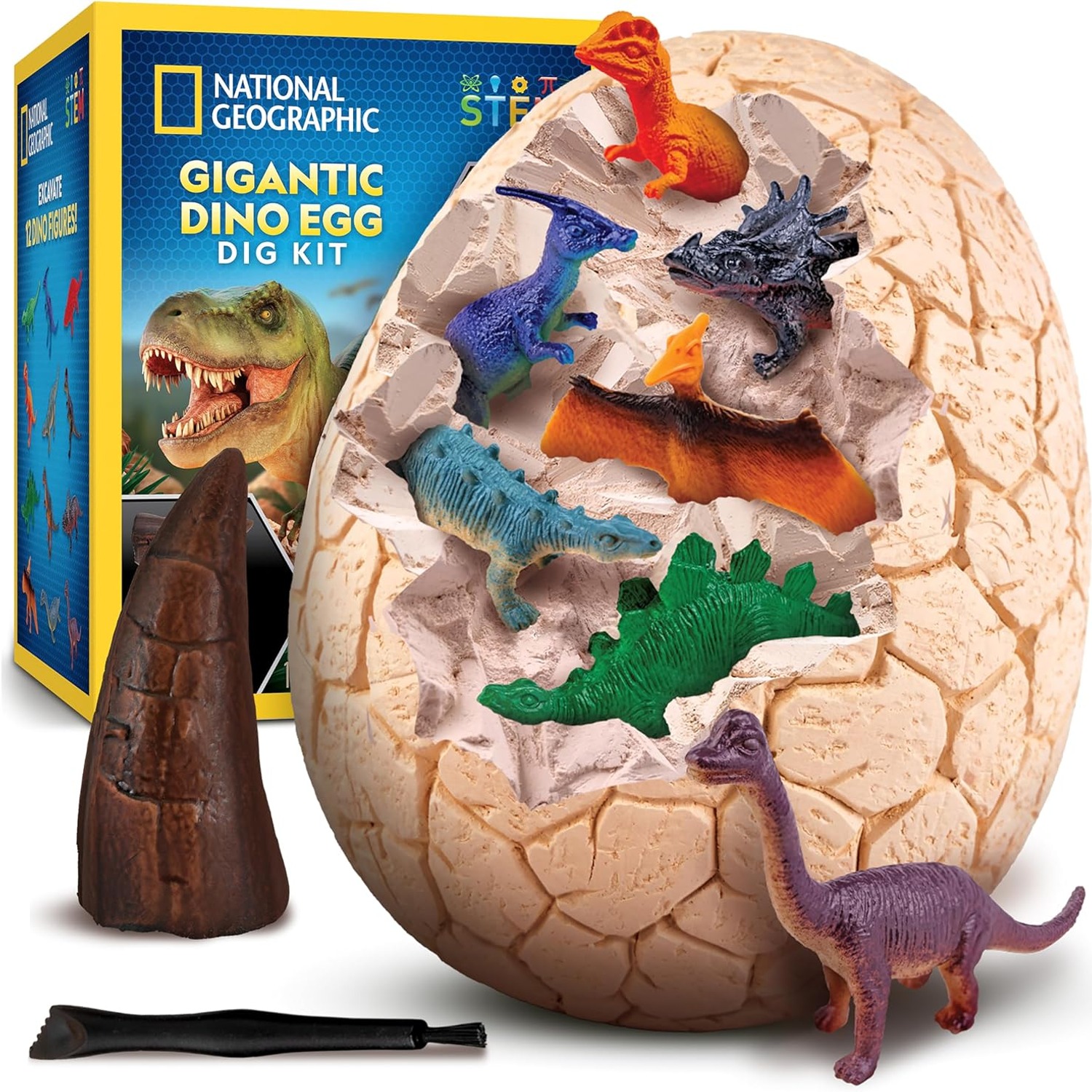
This kit is built around a jumbo dig brick standing over 15.2 cm tall, which Blue Marble describes as the largest they have made. Inside are 12 dinosaur figurines, including well known species such as velociraptor, stegosaurus and brachiosaurus.
Twelve is the number that matters. With a single-find kit, the child uncovers one thing and the activity ends. With a dozen, there is always another shape emerging from the material, so the session has rhythm. Children often pause, sort what they have found so far, then go back in. Some families stretch it across a whole weekend.
There is also a replica T. Rex tooth buried in there, 7.6 cm long and moulded from a real fossil tooth. In practice this is the piece that gets carried around the house and shown to visitors. It looks like something from a museum case rather than a toy aisle, and it gives the collection a centrepiece.
The learning side
A dig is fun on its own, but it gets better when the child knows what they are holding. The kit includes instructions and a learning guide that helps identify each figure and gives facts about diet, habitat and the period each dinosaur lived in.
This is the difference between a one-off activity and an actual dinosaur science kit. Children who are already obsessed with dinosaurs will fact-check the guide against what they know, which is half the fun for them. Children who are new to the topic get a gentle introduction without it feeling like homework.
The listed educational objective for the product is hand-eye coordination, which is fair for the digging itself. The guide adds the reading and identification layer on top.
Who it suits
The age range description on the product is 8 years and up. That feels about right, because the digging needs patience and the tools need care. A data field in the supplier record also lists a manufacturer recommended age of 0 to 7 years, which looks like a listing inconsistency rather than real guidance. Go with 8 and up as the practical line.
Younger children can absolutely enjoy it with a parent sitting alongside doing the harder chipping. Plenty of six and seven year olds have a great time this way. What they usually cannot do is sustain the effort alone, and there are small parts involved, so supervision is needed.
Older children, say ten to twelve, often treat it more like a challenge. They work faster, want to identify everything, and then build a display. If you are shopping for a palaeontology kit for kids in that bracket, the 12-figure count is what keeps them interested.
Adults buy these for themselves too, which we will not judge.
How to choose between dig kits
A few things actually matter when comparing options.
Size of the brick. Bigger means longer. A giant egg is a different proposition to a small slab, and the time difference is substantial.
Number of finds. One find is a moment. A dozen is an activity. If you want the kit to fill an afternoon, count the figures before you compare prices.
Whether the finds are worth keeping. Some kits produce fragile bits that break within a week. Figurines and a solid replica tooth survive being played with, which means the kit keeps giving value after the digging is done.
Whether a guide is included. Without one, a child uncovers an unnamed grey shape and shrugs. With one, they learn something. The included learning guide here does that work.
Whether anything needs assembly. This one does not, which matters when you are handing it over at a birthday party and nobody wants to read a manual.
Setting up and cleaning up
Put down a tray with a lip, or a sheet of newspaper, or take the whole thing outside. Have a small container ready for the figures as they come out, because a dozen small dinosaurs scattered across a table will not all survive the tidy-up.
Once a figure is free, brush the dust off, then rinse it under cool water and pat it dry. Let everything dry fully before boxing it up. The replica tooth can be wiped clean the same way.
Sweep or vacuum the work area before the dust gets walked through the house. Keep the tools somewhere sensible afterwards, away from toddlers.
Store the finished collection in a box, tin or pouch. Some kids line theirs up on a shelf instead, which is a fine outcome.
A note on reusability
Dig kits are single-use. Once the brick is excavated, that is it. This is true of every product in the category, so it is not a mark against this one, but it is worth knowing before you buy.
What you keep is the collection. Twelve dinosaur figures and a replica T. Rex tooth stay in the toy box long after the dig is a memory, which is why kits with a decent number of finds hold their value better than the single-fossil versions.
The short version
If you want a toy that fills real time rather than five minutes, a dinosaur egg dig kit does the job. This one is built around an oversized egg brick, holds 12 dinosaur figures plus a 7.6 cm replica T. Rex tooth, includes the excavation tools and a learning guide, and needs no assembly.
It suits children from around 8 upwards, works brilliantly as a rainy weekend project, and makes an easy gift because there is nothing to set up. Lay down some newspaper, hand over the tools, and leave them to it.